
Teeth Whitening, Teeth Whitening Information, Teeth Whitening Products
Do teeth whitening machines work?
Do teeth whitening machines work?
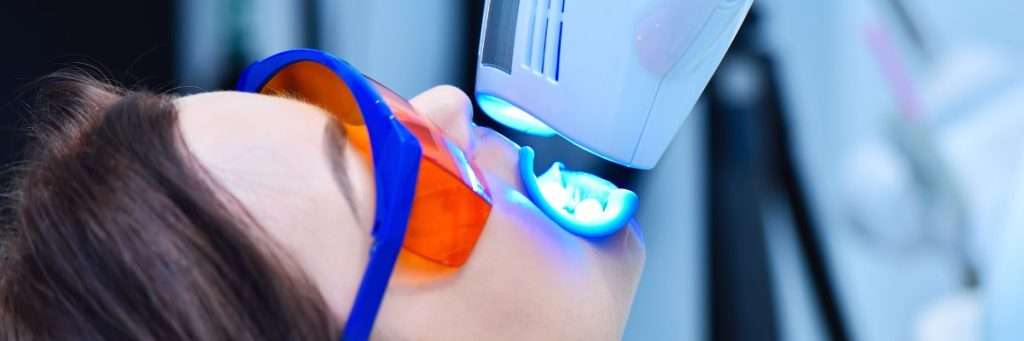
Yes, teeth whitening machines are effective at brightening and lightening the color of teeth. These machines typically use LED (Light Emitting Diode to activate the whitening agents in the gel applied to the teeth during the treatment process.
The whitening gel used in conjunction with these machines typically contains hydrogen peroxide or carbamide peroxide, which are bleaching agents that penetrate the enamel to break down stains and discoloration. The light emitted by the machine accelerates the whitening process by enhancing the activation of the whitening agents, resulting in faster and more noticeable results compared to treatments without light activation.
Teeth whitening machines are commonly used in professional settings such as dental offices, beauty salons, and spas, as well as in-home kits for personal use. When used correctly and under the supervision of a trained professional, teeth whitening machines can effectively improve the appearance of stained or discoloured teeth, leading to a brighter and more radiant smile.
It’s important to note that the effectiveness of teeth whitening treatments can vary depending on factors such as the severity of the staining, the type of whitening agent used, and individual differences in tooth structure and enamel thickness. Additionally, maintaining good oral hygiene habits and avoiding foods and beverages that stain the teeth can help prolong the results of teeth whitening treatments.


How do teeth whitening machines work?
Teeth whitening machines work by utilizing a combination of specialized lights and whitening agents to break down stains and discoloration on the surface and within the enamel of the teeth. Here’s how they typically work:
- Preparation: Before the whitening treatment begins, the teeth are cleaned to remove any plaque, debris, or surface stains that may interfere with the whitening process. Protective barriers may also be applied to the gums to shield them from the whitening gel.
- Application of Whitening Gel: A whitening gel containing hydrogen peroxide or carbamide peroxide is applied to the teeth. These bleaching agents penetrate the enamel and break down the molecules that cause stains and discoloration, revealing brighter, whiter teeth.
- Activation with Light: Once the whitening gel is applied, a specialized LED (Light Emitting Diode) or UV (Ultraviolet) light is directed at the teeth. This light activates the whitening agents in the gel, accelerating the chemical reaction that leads to whitening.
- Penetration and Oxidation: The whitening agents in the gel penetrate the enamel and oxidize the stains, breaking them down into smaller particles. This process helps to remove surface stains as well as stains that are deeper within the enamel.
- Rinse and Repeat: After a predetermined amount of time, the whitening gel is rinsed off, and the teeth are examined to assess the level of whitening achieved. Depending on the desired results and the severity of the staining, the treatment may be repeated multiple times to achieve optimal whitening.
- Post-Treatment Care: Following the whitening treatment, it’s essential to advise clients on post-treatment care to maintain the results. This may include avoiding staining foods and beverages, practicing good oral hygiene, and scheduling regular touch-up treatments as needed.
Teeth whitening machines work by combining the power of whitening agents with specialized lights to break down stains and discoloration, resulting in a brighter, whiter smile. When performed by a trained professional and following proper protocols, teeth whitening systems can effectively improve the appearance of stained or discoloured teeth, boosting confidence and enhancing overall oral aesthetics.


Are teeth whitening machines safe?

Coffee After Teeth Whitening: How Long Should You Wait?
If you’ve just had your teeth whitened, one of the first questions is: can you [...]

Teeth Whitening Cost Australia: Real Prices Explained
How much does teeth whitening cost in Australia? Prices vary widely depending on treatment type, [...]

Is Teeth Whitening Safe? Risks, Sensitivity & Facts
Teeth whitening is one of the most popular cosmetic treatments — but is it actually [...]

How Long Does Teeth Whitening Last?
Realistic Timeline + What Affects It Teeth whitening works — but it isn’t permanent. Some [...]

Teeth Whitening Before & After: What Results Are Realistic?
For clients, salons, and mobile technicians • Updated for current cosmetic whitening practices Before-and-after photos [...]

Teeth Whitening in Australia: The Complete Guide for Clients, Salons & Technicians
Thinking about teeth whitening — or offering it professionally? This complete guide explains how whitening [...]

Teeth Whitening Compliance & Insurance in Australia
If you’re starting (or upgrading) a teeth whitening service, compliance and insurance are not “nice [...]

What Professional In-Chair Teeth Whitening Really Is (And What It Isn’t)
Let’s Clear Up the Confusion Professional in-chair teeth whitening is one of the most requested [...]
